Drawing Tips

Beginner's Checklist for Building a Daily Sketching Habit
A daily sketching habit rarely dies from lack of talent. It dies on a Tuesday evening when you are tired, the pencils are in a drawer in another room, and you cannot think of a single thing worth drawing. The fix is not more motivation. It is a smaller, clearer setup that removes those three obstacles before they appear. Work through the checklist below in order, one item at a time, over a week or so.
1. Choose a Time You Can Defend
Most people decide to sketch "every day" and leave the when vague. Vague times lose to everything else. Pick a specific slot and treat it as a small appointment: after the morning coffee, on the train between two stops, ten minutes before the laptop closes for the night.
Two rules make the slot stick. Attach it to something that already happens without fail — a meal, a commute, a dog walk, the kettle boiling. And keep the same slot for a full month before you consider moving it. Novelty is not the goal here; familiarity is.
Set a floor, not a target
Decide now what counts as a session on your worst day. Five minutes and one small drawing is enough. A floor you can meet while exhausted is worth more than an ambitious target you meet twice a week. If you finish the five minutes and want to keep going, keep going. If not, the day is already a success.
2. Assemble a Kit You Can Reach in Ten Seconds
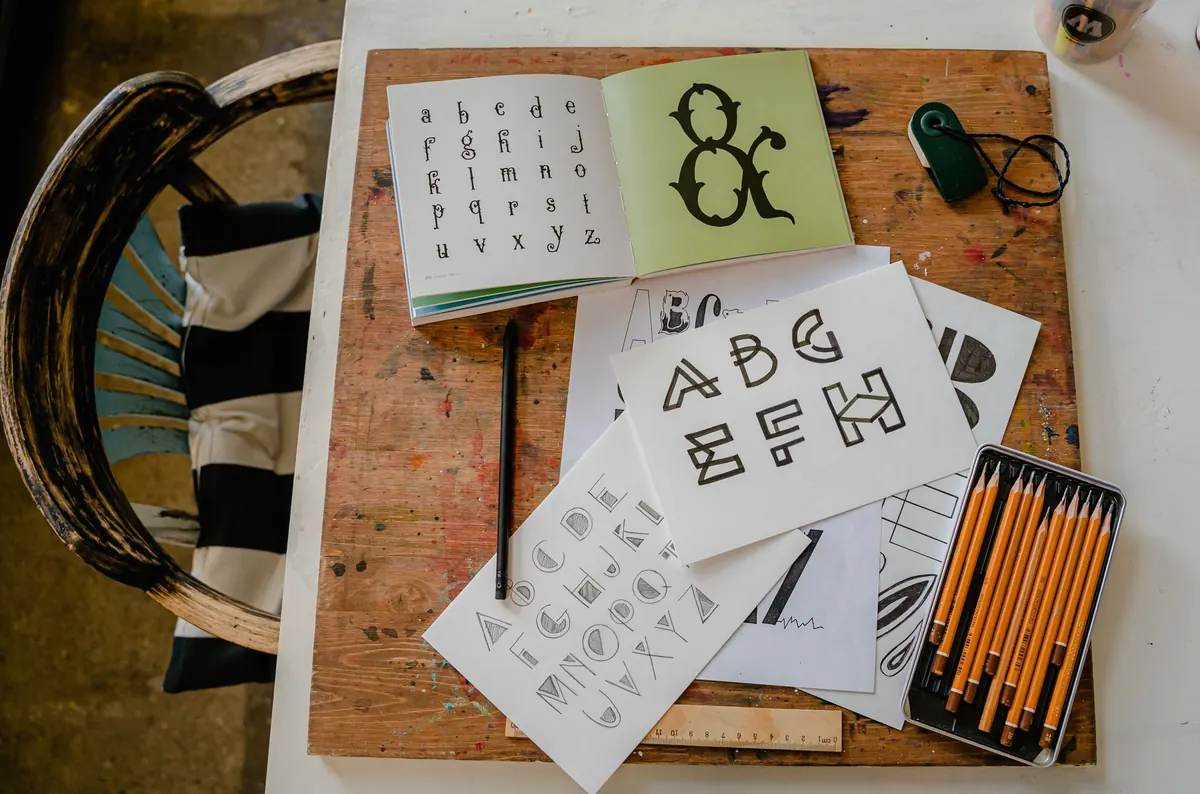
Every extra step between deciding to draw and drawing costs you. Keep one small kit that never gets put away, in the place where you usually sit.
- One sketchbook. Same size every time, cheap enough that you are not afraid to ruin it. A5 or A6 is plenty for daily work.
- Two pencils. An HB for light lines and a 2B for darker ones covers more than you would expect.
- One pen. A fine liner or any waterproof pen, for days when you want to commit to a line.
- An eraser and a sharpener. Small, cheap, and irritating to be without.
- A pouch or tin. Everything lives inside it, and everything goes back in when you finish.
Resist the urge to buy more before you have drawn for a month. New materials feel like progress and rarely are. The kit's job is to be complete and invisible, not impressive.
3. Build a Prompt Bank Before You Need It
The blank page is hardest when you are deciding what to draw and drawing at the same time. Separate those two jobs. Spend twenty minutes once, and write a list of thirty things you would not mind drawing in the back of your sketchbook.
Specific prompts beat clever ones. "Draw something interesting" gives you nothing to start from; "draw the mug on your desk from above" gets a pencil moving within seconds. Keep the list close to the things you can actually see.
Prompt categories that keep working
- Within reach: your non-drawing hand, a mug, keys, a houseplant, the corner of the room you are sitting in.
- From memory: the view from a window you know well, a kitchen you grew up in, your route to work.
- Timed studies: thirty-second gestures of people waiting, two-minute studies of a chair.
- Constraints: draw something using only straight lines, only shadows, or without lifting the pen.
- Sequences: the same object on five different days, from five different angles.
When the list runs out, add to it while you draw. Notice which prompts you avoided and which you enjoyed — that is useful information for next month's list.
4. Cap the Session Before It Becomes a Project
Daily sketching fails most often because each session quietly turns into a finished piece. Then it needs a good hour, then a good mood, then good light, and the habit collapses under its own weight.
Set a timer for ten or fifteen minutes and work on half a page. When the timer goes, stop, even mid-line. Stopping early leaves you wanting to come back, which is exactly the feeling you want attached to the habit.
A daily sketch is evidence that you looked, not a piece of work to be judged.
Working small and fast also teaches you things a slow drawing cannot: where a shape actually sits, how a shadow really falls, how much you can leave out before an object stops reading. Those lessons accumulate faster than one polished drawing a month.
5. Make Tracking Simple Enough to Keep
Tracking helps only if it takes less time than drawing. Choose one method and stick with it for a month.
The calendar mark
Print a month grid or use a wall calendar. One cross for every session, no shading, no colour coding. The growing row of crosses is the reward, and there is nothing else to maintain. Keep the calendar where you sketch, not where you work.
Count weeks, not streaks
A perfect streak is fragile: one missed evening and the whole thing feels ruined, which is how good habits get abandoned over a single Tuesday. Count how many days you sketched out of seven instead. Five out of seven is a solid habit. Seven is a bonus.
Let the sketchbook be a record too
Date the corner of every drawing. In six weeks, flipping back through dated pages shows progress that memory will not: firmer lines, better proportions, fewer hesitant starts. Add one short line at the end of a session if you like — what you drew, how long it took, one thing you noticed. Keep it short enough that it never becomes the reason to skip.
6. Decide Now What Happens When You Miss
You will miss days. Travel, illness, deadlines and plain tiredness will all interrupt the run, and the habit only breaks if you treat a missed day as a verdict. Decide the response in advance so it does not require a decision later.
- Never miss twice. One missed day is an accident. Two in a row starts a new pattern.
- Do not double up to catch up. Two sessions in one day does not replace the missed one, and it makes the next session feel like a debt.
- Restart at the floor. After a gap, come back with five minutes and one small object, not a grand return.
- Change one variable if it keeps failing. If you keep skipping the same slot, the slot is wrong — move it, shorten it, or swap the prompt list. Adjust the system, not your opinion of yourself.
Your First Week, Step by Step
- Day one: write down the exact time and the thing you will attach it to. Put the kit in place.
- Day two: fill half a page with thirty prompts in the back of the sketchbook.
- Day three: first timed session, ten minutes, something on your desk.
- Days four to six: one session a day from the prompt list. Stop when the timer stops.
- Day seven: look back at the week, count the crosses, and adjust one thing only — the time, the length, or the prompts.
Keep the whole arrangement small enough that a bad week cannot dismantle it. A habit built on five honest minutes will still be there in six months; one built on an hour of good intentions usually is not. Start with the timer, the tin, and the list, and let the drawings take care of themselves.
Photo: Monfocus / Pixabay