Sketchbooks
A Beginner's Guide to Choosing Your First Sketchbook Size
Stand in front of a shop wall of sketchbooks and the choice turns strangely emotional. Creamy paper, tidy elastic bands, fat blocks of pages — everything looks inviting, and nothing on the cover tells you which one will actually end up in your bag. Format is the decision you live with longest. It shapes whether the book leaves the house, how much of a scene fits on a page, and whether you can finish a drawing standing up on a crowded bus. Here is what each of the common sizes asks of you.
What Size Actually Changes
Paper weight, binding and page count get most of the attention in sketchbook conversations, but the proportions of the page do quieter, more constant work. A small page nudges you toward detail and single subjects: a shoe, a hand, the corner of a kitchen. A large page pulls you back and asks for structure — big shadow shapes, value blocks, the whole street rather than one window. That is not a statement about skill. It is simply what the page invites you to do.
Comfort is physical as well. On a pocket book you draw from the wrist, with the sketchbook resting in one hand. On A4 you work from the elbow and shoulder, stepping back, arm moving. Both are useful practice, but they are different kinds of practice, and you will do more of whichever your book allows.
Then there is the boring arithmetic of carrying the thing. A sketchbook that is too heavy, too large, or too precious stays at home — and a sketchbook at home teaches you nothing about drawing from life.
Pocket Sketchbooks: The Ones You Forget You're Carrying
Pocket formats sit around A6, roughly 10 × 15 cm. They go into a coat pocket, a jacket inside pocket, or the side pocket of a rucksack and then disappear until you need them. For a first book, that invisibility is a genuine advantage: you cannot talk yourself out of drawing because the sketchbook is inconveniently at home.
They suit quick gestures, five-minute studies, thumbnails for larger compositions, and the kind of drawing you do while waiting for someone. Hands, shoes, coffee cups, people on benches, a doorway you pass every morning.
They struggle with anything that needs room: two-page spreads, tall figures, wet washes that buckle a small sheet, or a scene with three or four elements to arrange. When you buy one, check that it opens flat and that you can hold it in one hand while drawing with the other. That is the entire point of the format.
A5: The Everyday Compromise
A5 measures 148 × 210 mm, and it is where most beginners land for good reasons. It fits a tote bag or a large coat pocket, it is big enough for a portrait sketch or a table full of objects, and small enough that a page still feels finishable in twenty or thirty minutes.
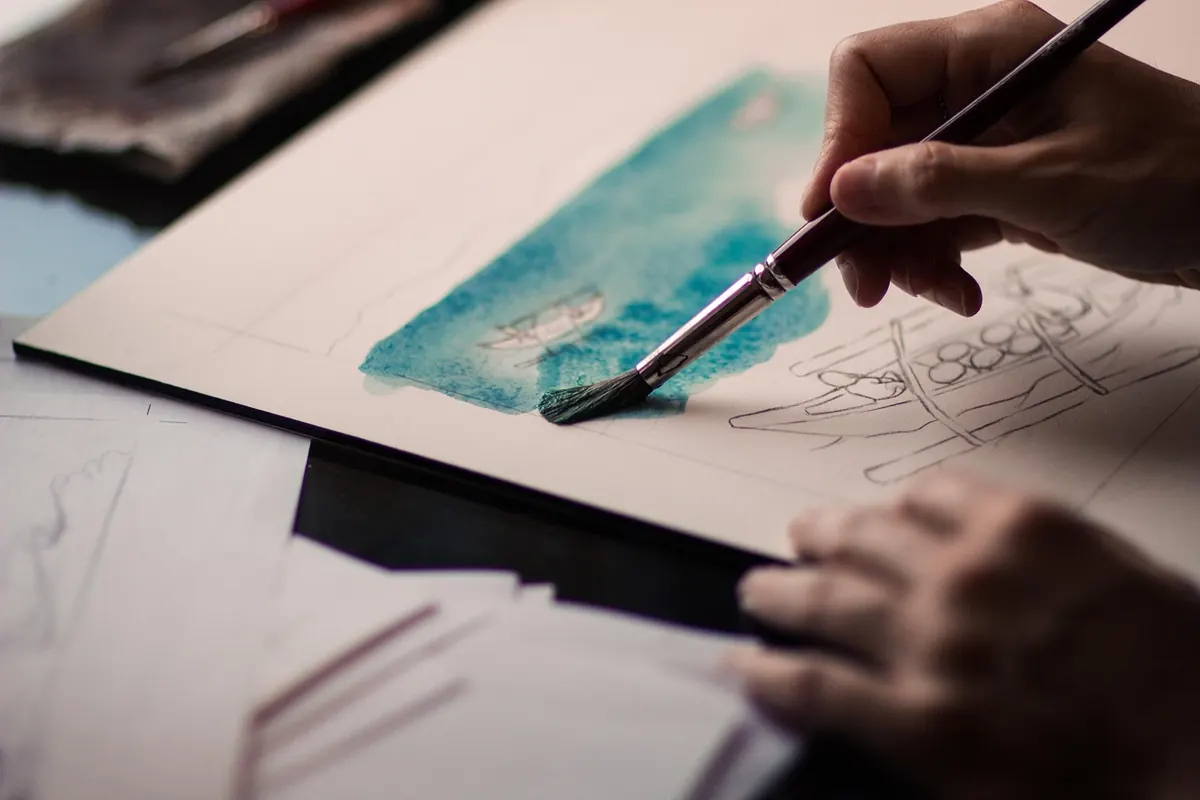
If you plan to work in ink or light washes, look for paper around 120–160 gsm; it takes a little water without turning into a relief map. If you only use pencil, a lighter 90 gsm sheet is fine and keeps the book thin.
Try rotating the book. A5 in landscape gives you a wide, letterbox page that is unexpectedly good for street scenes and rows of objects, and it forces you to stop centring everything. Working across two facing pages is another way to buy space without buying weight.
The best sketchbook is the one in your bag when something worth drawing appears.
A4: Room to Think
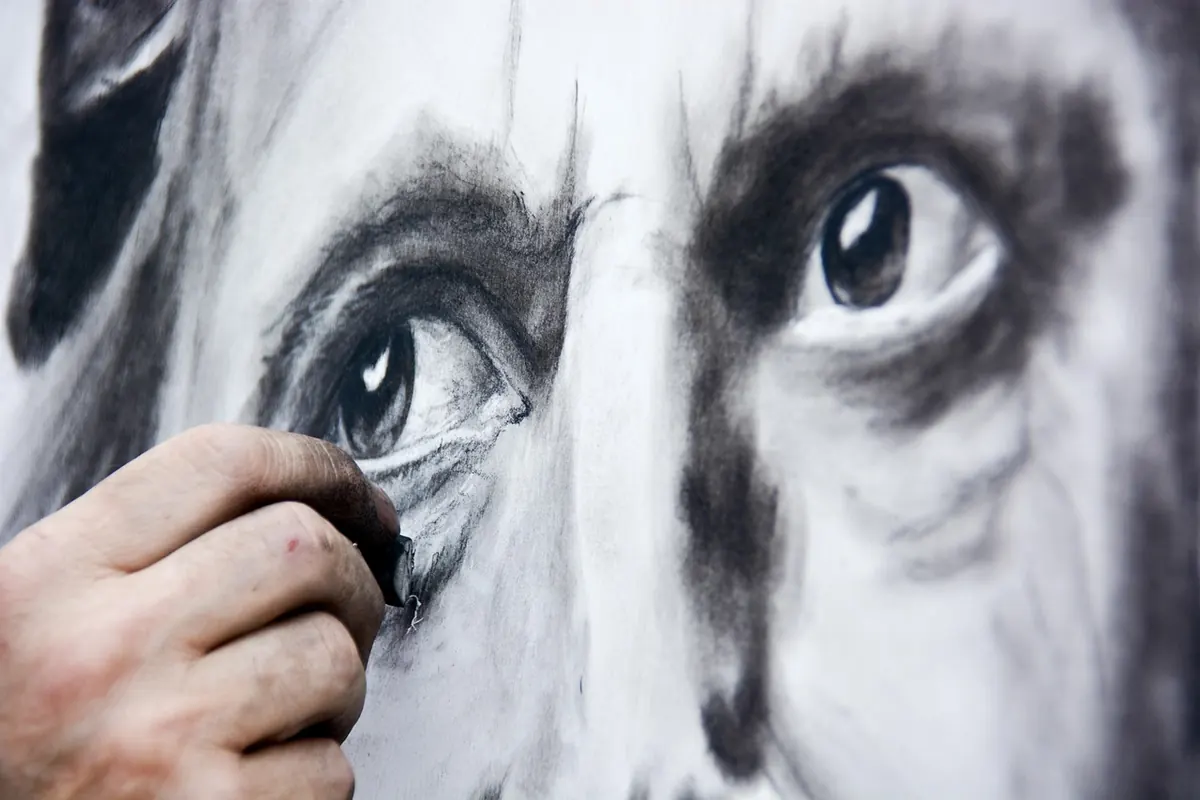
A4 — 210 × 297 mm — is a desk book, or a book for a tote with a firm base. It is the format for life drawing, large still lifes, architectural studies, and any medium that needs space: charcoal, brush pen, gouache, collage. The page is big enough that you have to move your whole arm, which is a skill worth building early.
The trade-offs are practical. A4 is awkward on a café table, hopeless standing on a train, and heavy over a hundred pages. Spiral or wire binding that folds fully back makes it far easier to use in a cramped room, and a hard back lets you draw without a table underneath.
One quiet advantage: an A4 page scans or photocopies at close to actual size, which makes it easy to keep digital copies of finished work without resizing anything.
Square Sketchbooks: Composition Without a Default
Square books — common sizes are 14 × 14 cm and 20 × 20 cm — remove one decision entirely: you never choose portrait or landscape. Every page starts neutral.
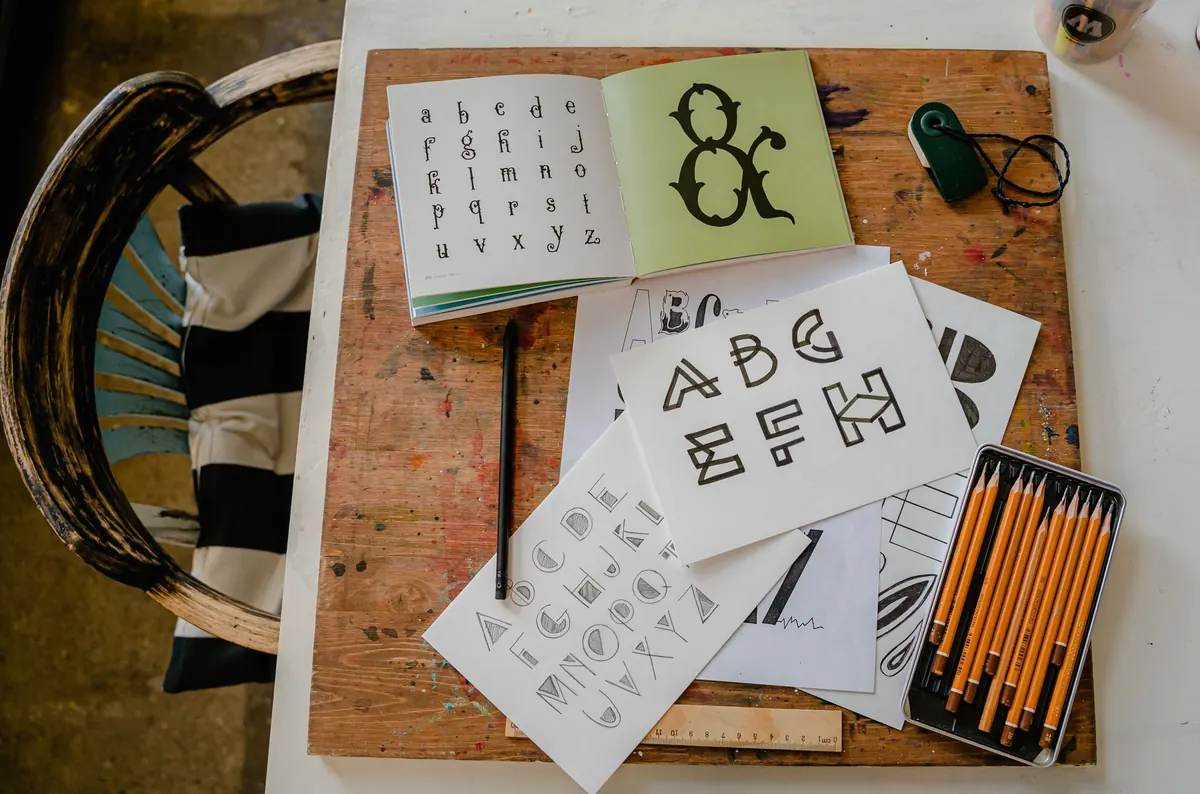
That neutrality is useful for still life, single objects, pattern work, lettering, abstract studies, and anything you plan to photograph and post, since a square page fills a square frame with no cropping. It also tends to produce centred, stable compositions, so push a few subjects deliberately into a corner and see what happens.
Where square books fall down is tall or wide subjects. Figures, buildings and landscapes all want a rectangle, and you end up drawing a small rectangle inside a square page whether you meant to or not. Square books in the heavier mixed-media weights also tend to be chunky, so check the thickness before you commit.
A Quick Way to Choose
- Count your pockets. Measure the bag or jacket you carry daily. If a book does not fit, it will not travel.
- Match the paper to the medium. Pencil only: 90–120 gsm. Ink and light wash: 140–160 gsm. Wet media: 200 gsm and up.
- Name the drawing you want to make this month. People on buses, life drawing, or buildings will each point to a different format.
- Buy two sizes, not five. One pocket book plus one A5 or A4 covers almost every situation and keeps the decision small.
- Check the binding in the shop. Open it to the middle. If it fights you or the pages do not lie flat, put it back.
- Give it a week. If you have not touched it, either the size is wrong or the book feels too precious to spoil.
A First Purchase You Won't Regret
Start with a modest A5 in a paper weight that suits how you actually draw, plus a cheap pocket notebook for five-minute sketches. Nothing hardcover-and-expensive for book one. Write your name and the date on the inside cover, number the pages if you like, and date each drawing. Dates turn a pile of pages into a record, and a record is far harder to abandon than a nice object you are afraid to ruin.
Leave the first page blank or scribble on it deliberately. A book that already has a bad drawing in it stops being a museum piece and starts being a tool. Then take it somewhere with a bench, sit down, and draw the least interesting thing in sight. The size question answers itself once the pages start filling.
Photo: netmaru / Pixabay